

Congratulations!
You have successfully registered for the training. Our team of specialists will be in touch with you shortly.
Go back


 Georgia
This analytical review is based on a combination of quantitative and qualitative research conducted by GAMMA Research between 2019 and 2025. The core of the analysis relies on data from the Pharmacy CENSUS 2023, covering eight major cities in Georgia and including detailed mapping of pharmacy chains, retail space, store formats and market density.
The analysis is further supported by data from GAMMA’s ongoing consumer studies and tracking programs, including the BESIDE project, which examines psychographic profiles, consumer behavior and purchase motivations, as well as insights from qualitative interviews and in-store observations. The integration of infrastructure data (CENSUS Georgia), behavioral metrics and qualitative insights provides a holistic and realistic picture of the pharmacy market’s structure, development and key transformation drivers.
Market Structure According to CENSUS 2023
According to the Pharmacy CENSUS 2023, the total retail space of pharmacies across the eight cities reaches approximately 62,000 sq. m, with an average store size of around 48 sq. m. This positions the pharmacy channel as a fully developed modern retail sector, comparable in scale to organized grocery retail.
The market is highly concentrated. The three largest pharmacy chains – PSP, Aversi and Pharmadepot – control more than half of the total pharmacy retail space. PSP accounts for approximately 21% of total space, Aversi for 16%, and Pharmadepot for 15%. GPC ranks as the fourth major player with a share of around 12%. Altogether, these chains represent over 65% of the entire pharmacy retail market.
The remaining share is distributed among Impex Pharm (around 5%), NeoPharm, Pharm House, GNG Pharma and several smaller chains, while the combined share of “other” and independent pharmacies accounts for approximately 22%.
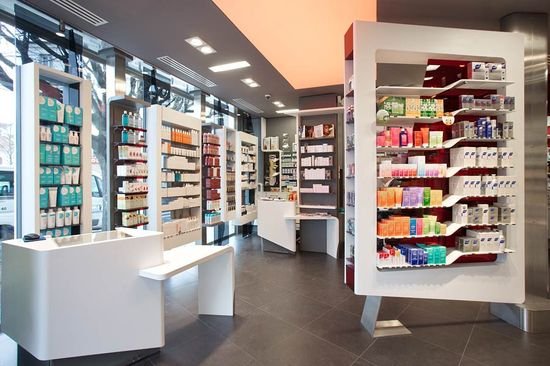
Chains differ not only in scale but also in format. GPC operates the largest stores, with an average pharmacy size exceeding 80 sq. m, positioning it as a full health & beauty format capable of offering a broad range of care, cosmetic and FMCG products. Pharm House averages around 65 sq. m, PSP approximately 60 sq. m, and Impex Pharm about 45 sq. m. In contrast, smaller and regional pharmacies typically operate in the 30-35 sq. m range, functioning as neighborhood stores focused on quick purchases and core assortments.
The average pharmacy density in urban Georgia in 2023 stood at 0.71 pharmacies per 1,000 inhabitants, equivalent to roughly one pharmacy per 1,400 people. In Tbilisi, density reaches 1.06, while in Batumi it stands at 1.02 pharmacies per 1,000 inhabitants, indicating more than one pharmacy per thousand residents.
These cities can be considered locally saturated, where competition is driven not by physical presence but by consumer switching between chains and individual locations. Density data clearly indicate that by 2023 the Georgian pharmacy market had entered a stage of maturity and local oversupply.
As a result, the market is structurally segmented by format: large chains compete through extended assortments and service, including beauty categories, while smaller pharmacies rely on convenience and price competitiveness.
Dynamics 2019-2025: Increasing Visit Frequency and an Expanded Role for Pharmacies
Tracing market dynamics since 2019 using BESIDE data and subsequent GAMMA Research tracking reveals a clear trend. Even before the pandemic, pharmacies ranked among the most frequently visited retail outlets, with a significant share of urban residents visiting at least once a week, and many several times per month.
The pandemic further strengthened this trend due to increased demand for medicines, vitamins and hygiene products. By 2023-2024, visit frequency remained high, but the underlying motivation evolved. Consumers continue to visit pharmacies regularly, increasingly not only due to illness, but also for preventive health, personal care, cosmetics, baby products and wellness items.
Today, over 80% of the population visits a pharmacy at least once a month, with a substantial share visiting weekly or more often. This makes pharmacies one of the highest-frequency offline retail formats, effectively becoming a “natural stop” in the consumer’s everyday routine.
At the same time, the importance of non-medical assortments has grown significantly. While medicines once dominated sales, the share of care products, cosmetics, dietary supplements, baby and hygiene products now reaches 30-35% of turnover in some chains. Over the past five to six years, this share has effectively doubled. Strategically, this marks a shift: pharmacies have evolved into FMCG and beauty channels, not merely points of medicine dispensing.
Consumer and Psychographics: Why Pharmacies Are Winning
Women aged 30-55 remain the core pharmacy audience, as they typically make most health and care decisions for the household. However, from a psychographic perspective, the market is far more complex.
Traditionalists value stability and trust medical professionals, making Aversi and medically oriented chains their natural choice. Achievers and Fashionistas drive demand for premium skincare and cosmetics; they are brand-sensitive, appearance-conscious and actively influenced by social media. Survivors behave rationally and respond strongly to promotions, favoring Pharmadepot, Pharmhouse and other value-oriented formats.
This psychographic diversity makes the pharmacy channel unique. Unlike traditional grocery retail, pharmacies serve both rational and emotional segments simultaneously, across different occasions – from treatment to self-care and appearance enhancement.
Emotional Drivers: Trust, Expertise and the “Right Place” Effect
The key intangible asset of the pharmacy market is trust. Georgian consumers perceive pharmacies as environments with stricter quality and safety standards than supermarkets. Even when FMCG or beauty products are compositionally similar to mass-market alternatives, their presence in a pharmacy elevates perceived credibility, professionalism and appropriateness.
A second pillar is the role of the pharmacist. In most categories, pharmacists act not as salespeople but as trusted advisors. GAMMA research shows that more than half of consumers acknowledge that pharmacists recommendations directly influence their choice of medicines, supplements or care products, with even stronger impact among older consumers. Pharmacists thus represent the most influential offline “opinion leaders” in the market, often outweighing traditional advertising.
The third driver is the growing perception of pharmacies as spaces of self-care and responsible choice. Younger consumers and women increasingly see pharmacy purchases not as problem-driven reactions, but as proactive investments in well-being – skincare, vitamins, sleep aids or wellness snacks. According to GAMMA data, 85% of women purchase cosmetics in pharmacies, reinforcing the channel’s role in beauty and care.
Competition and Chain Positioning
CENSUS 2023 data clearly illustrate how different chains occupy distinct positions. PSP, with the largest share of retail space, emphasizes emotional branding and a strong beauty assortment. Aversi remains the leading medical authority, benefiting from nationwide coverage and the “clinic + pharmacy” model. GPC, with the largest average store size, is perceived as a comfortable family-oriented format with a broad and well-organized assortment. Pharmadepot, Pharmhouse and Impex address the rational segment, focusing on affordability, everyday needs and convenience.
As a result, competition is clearly segmented, and consumers choose pharmacy chains not only based on price, but also on brand “character”: medical authority, beauty and service, or straightforward value.
Changing Role of Pharmacies in the FMCG Ecosystem
In recent years, pharmacies have increasingly cannibalized FMCG sales from supermarkets, particularly in high-involvement and quality-sensitive categories such as baby care, facial and body care, sun protection, vitamins, dietary supplements and specialized hygiene. Consumers are willing to pay a premium for “pharmacy products,” perceiving them as safer and more reliable, while dense pharmacy networks and convenient locations further reinforce this shift.
For FMCG manufacturers, this means that pharmacies are no longer an auxiliary channel – they have become strategic. Presence in pharmacies shapes brand perception, price positioning and target audience, while pharmacist engagement and shelf execution directly affect sales performance.
Conclusions
Combining CENSUS 2023 data, 2019-2025 market dynamics and GAMMA’s qualitative insights leads to several key conclusions. The Georgian pharmacy market is a stable, growing and highly heterogeneous sector, where leading chains continue to strengthen their positions while independent pharmacies retain relevance in specific regions and niches. Pharmacies can no longer be viewed solely as medical outlets; they represent a convergence point of healthcare, FMCG and beauty, addressing health, appearance and everyday comfort. Trust and expertise are the primary success drivers, with systematic pharmacist engagement playing a central role. At the same time, the pharmacy channel remains far from saturated in well-being, premium care, specialized hygiene and private label categories, making it a key source of future growth.
GAMMA Research will continue to closely monitor the development of the Georgian pharmacy and FMCG markets. We would be pleased to welcome market players as participants in our research projects and partners seeking a deeper understanding of their consumers and confident, data-driven decision-making.
 Georgia
This report presents a comprehensive study of consumer behavior and lifestyle among the urban population of Georgia in 2025, conducted within the BESIDE project.
Read more
 Multi-country
As part of the BESIDE Fintech project, an analysis was conducted to explore how different psychographic segments of the population engage with fintech services. The study
Read more
 Georgia
The growing number of online shoppers and the rising frequency of orders send a clear signal to businesses: e-commerce in Georgia is gaining momentum. The main growth drivers remain young people, women, and urban residents.
Read more
You have successfully registered for the training. Our team of specialists will be in touch with you shortly.
Go back